Charleston sits at the sharp end of hurricane season. From June through November — with the real peak landing in August and September — every home on the coast is one storm away from finding out how well its HVAC system was prepared. And an outdoor condenser is uniquely exposed: it lives outside, it runs on electricity, and it is full of components that do not forgive standing water.
The good news is that most storm damage to heating and cooling equipment is preventable, and the steps take less than an hour. Here is what we tell our own customers across Charleston, Mount Pleasant, James Island and the surrounding communities.
Before the storm
Turn the system off at the breaker
This is the single most important step, and the one most often skipped. Power surges during a storm — and especially when power is restored afterwards — are a leading cause of compressor and control-board failure. Shutting the unit down at the breaker removes that risk entirely. Cool your home down in advance, then switch it off before conditions deteriorate.
Clear the area around the outdoor unit
Anything loose within about ten feet of your condenser becomes a projectile in sustained wind. Patio furniture, planters, grill covers, yard tools, loose fence panels. Trim back overhanging branches while you can still do it safely.
Do not wrap the unit in plastic
It is a common instinct and it does more harm than good. Sealing a condenser in plastic traps moisture against the coil and accelerates corrosion — a particular problem in our salt air. If you want to protect the top of the unit from falling debris, use a purpose-made breathable cover, or a sheet of plywood weighted down. Leave the sides open.
Secure the unit itself
Condensers sold in coastal markets are often installed with hurricane straps or anchored to their pad. If yours is simply sitting on a pad, it is worth asking whether it should be tied down. We check this as part of any AC installation or replacement, but older installations frequently predate the practice.
Photograph everything
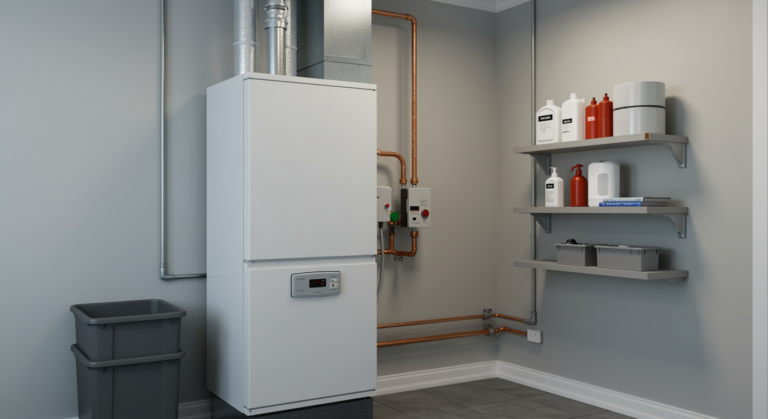
Take clear photos of the outdoor unit, the indoor air handler and the model and serial plates before the storm. If you end up filing an insurance claim, documented pre-storm condition is the difference between a smooth claim and an argument.
After the storm — the part that matters most
Do not simply switch the system back on. This is where most of the expensive, avoidable damage happens. A unit that has been through flooding or storm surge can look completely normal and still be a short circuit waiting to happen.
Check the water line first
Look for a debris or silt line on the outdoor unit. If water reached the level of the electrical components or the compressor, the system needs to be inspected before it is energised. Salt water is significantly worse than fresh — it is conductive and it keeps corroding long after everything looks dry.
Look and listen before you commit
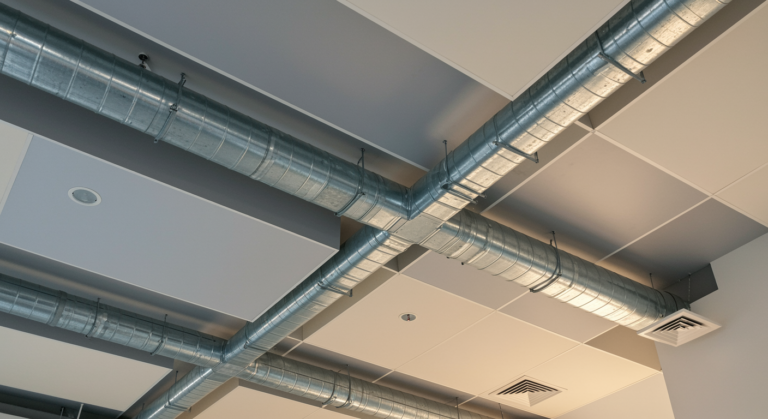
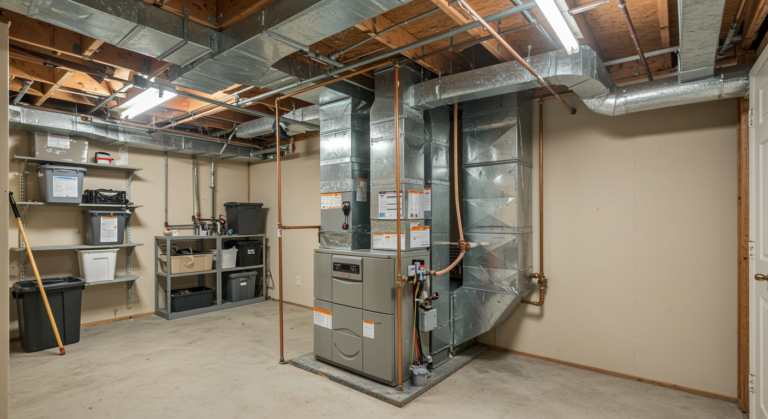
Walk the unit. Check for a bent or dented cabinet, a shifted or tilted pad, crushed coil fins, disconnected line-set insulation, or any exposed wiring. Inside, check that your air handler and any ductwork in a crawlspace or garage stayed dry. Saturated ductwork and wet insulation are a mould problem in the making, and in our climate that happens fast.
Restore power deliberately
If everything looks sound and the unit stayed dry, switch the breaker back on and let the system sit powered but idle for a few hours before calling for cooling — most modern systems have a crankcase heater that needs that time to clear refrigerant out of the compressor oil. Then run it and pay attention. Unusual noise, weak airflow, warm air, short cycling or a burning smell all mean shut it down and call.
If it flooded, call before you switch on
A flooded system is not a DIY situation. Contactors, capacitors, control boards and compressor windings all need to be checked properly, and running the system to “see if it works” is how a repairable problem becomes a replacement. Our AC repair and HVAC repair teams handle post-storm inspections throughout the Charleston area.
The quieter coastal problem: salt and humidity
Storms get the attention, but the slow damage is constant. Salt air corrodes condenser coils and cabinets year-round, which is why coastal units frequently age faster than the same model twenty miles inland. Rinsing your outdoor coil with a garden hose every few months — power off, gentle pressure, never a pressure washer — measurably extends its life.
Humidity is the other half. After a storm, homes that lost power for days often develop musty odours as moisture settles into carpets, ducts and drywall. If that smell lingers once your system is running again, it usually means moisture is still present somewhere in the system, and it is worth having your indoor air quality assessed rather than masking it.
A short pre-season checklist
- Know where your HVAC breaker is — before you need it in the dark
- Photograph both units and their data plates
- Confirm the outdoor unit is anchored to its pad
- Clear and trim the area around the condenser
- Change your filter so the system starts clean when power returns
- Have any known issue repaired now, not during a callout backlog
- Save your HVAC company’s number in your phone
That last one matters more than it sounds. After a significant storm, every HVAC company in the Lowcountry is booked solid, and the homes that get seen first are the ones that called first.
We are here when you need us
If your system took a hit this season — or you would rather have it checked before the next named storm forms — RedBox Heating & Air provides straightforward inspections, honest assessments and upfront pricing across Charleston and the surrounding communities. Get in touch for a free estimate or call us directly at (843) 969-2269.